Written and medically reviewed by Dr. Raymond Su Wei Siong, who leads implant treatment at Lau Dental
Published · Last updated · 13 min read
All-on-4 dental implants in Malaysia cost roughly RM25,000 to RM50,000 per arch, replacing a full upper or lower set of teeth on four titanium implants. At our Sri Petaling clinic the figure starts at RM40,000 per arch.
Every other Malaysian guide to this treatment is written to sell it. They cover the benefits, the timeline and the price tiers, and stop. None of them tell you the failure rate, that jawbone is deliberately reduced to seat the bridge, that you will eat soft food for about twelve weeks, or what happens when one implant goes. Those are the questions people actually search for — and right now Google answers them using American clinics, because no Malaysian source does.
This guide does. It is the conversation we have in the chair before anyone commits RM40,000 to a surgical procedure.

The short answer
| Question | Short answer |
|---|---|
| Cost per arch in Malaysia | RM25,000 – RM50,000 · ours from RM40,000 |
| Teeth the same day? | A temporary bridge, yes. The permanent one comes 3–6 months later |
| How long until you eat normally | About 12 weeks of soft food |
| Published failure rate | Roughly 5–10% of implants fail to integrate |
| Upper age limit | None — health decides, not age |
| Bone graft needed? | Usually not; tilting the rear implants is the point of the technique |
What All-on-4 actually is
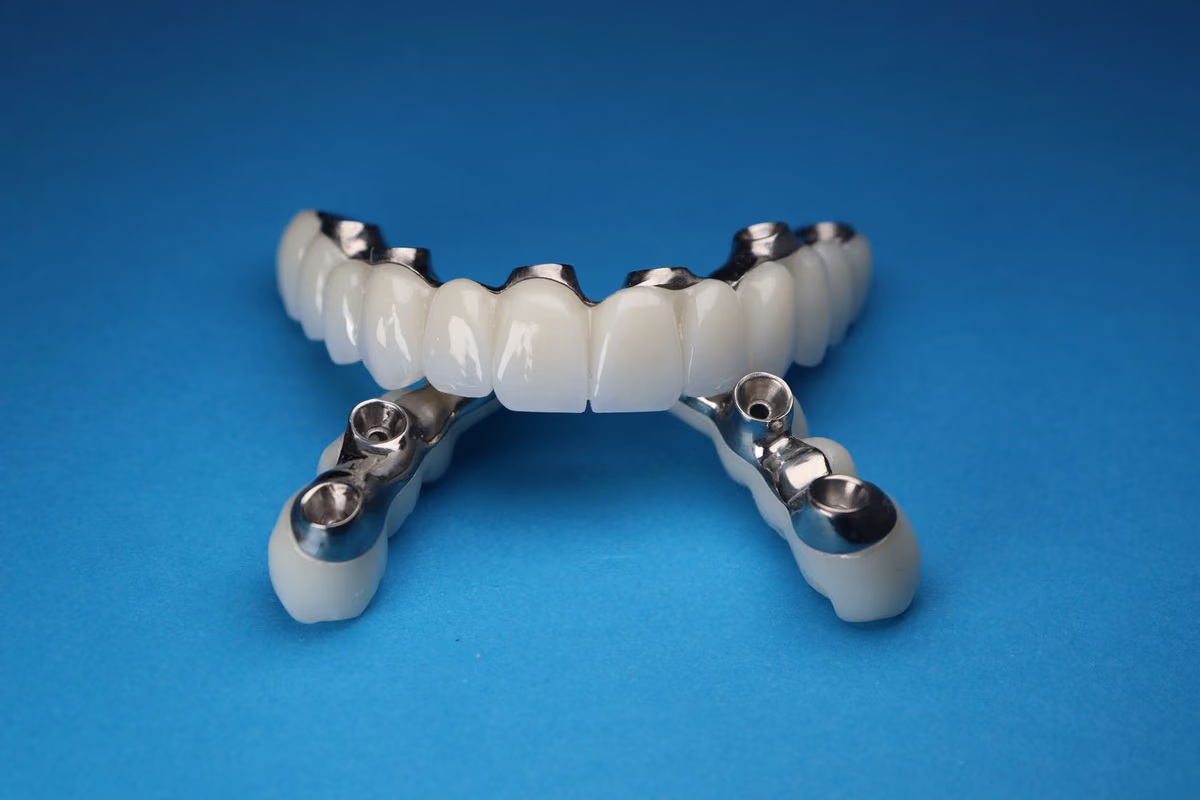
One fixed bridge of teeth carried by four implants in a single jaw. The two at the back are placed at an angle, which lets them anchor into denser bone further forward and usually avoids the bone graft a straight implant would need. That tilt is the whole idea — it is why four can do the work of six or eight.
On “teeth in a day”, be precise about what you are promised. You do leave with fixed teeth that day, but they are a temporary bridge. The permanent one is fitted three to six months later, once the implants have fused. Clinics advertising “teeth in a day” are not lying; they are compressing the sentence. Ask which bridge the quote covers — temporary, permanent, or both.
What it costs in Malaysia
Published ranges across Malaysian clinics, and where we sit in them:
| Tier | Per arch | Typically means |
|---|---|---|
| Budget | RM25,000 – RM35,000 | Standard implant brands, acrylic hybrid bridge |
| Mid | RM35,000 – RM45,000 | Established brands, more durable bridge material |
| Premium | RM45,000 – RM50,000+ | Top global brands, zirconia bridge |
| Lau Dental, Sri Petaling | All-on-4 from RM40,000 All-on-6 from RM55,000 | Mid-tier. We are not the cheapest option in KL |
We would rather say that plainly than have you find out after a consultation. If the lowest number available is what matters most, there are clinics in the Klang Valley below us and they are not doing anything improper — they are using different implant systems and bridge materials. What you are buying at the mid tier is a fixture brand with long published survival data and parts that will still exist in fifteen years when the bridge needs attention.
Two costs that sit outside most quotes, ours included: extractions of any remaining teeth, and the 3D CBCT scan at RM350 that decides whether the plan is even viable. Our full implant cost guide breaks down single-tooth pricing and what each quote should already include, and every figure is on the published price list.
All-on-4 vs All-on-6
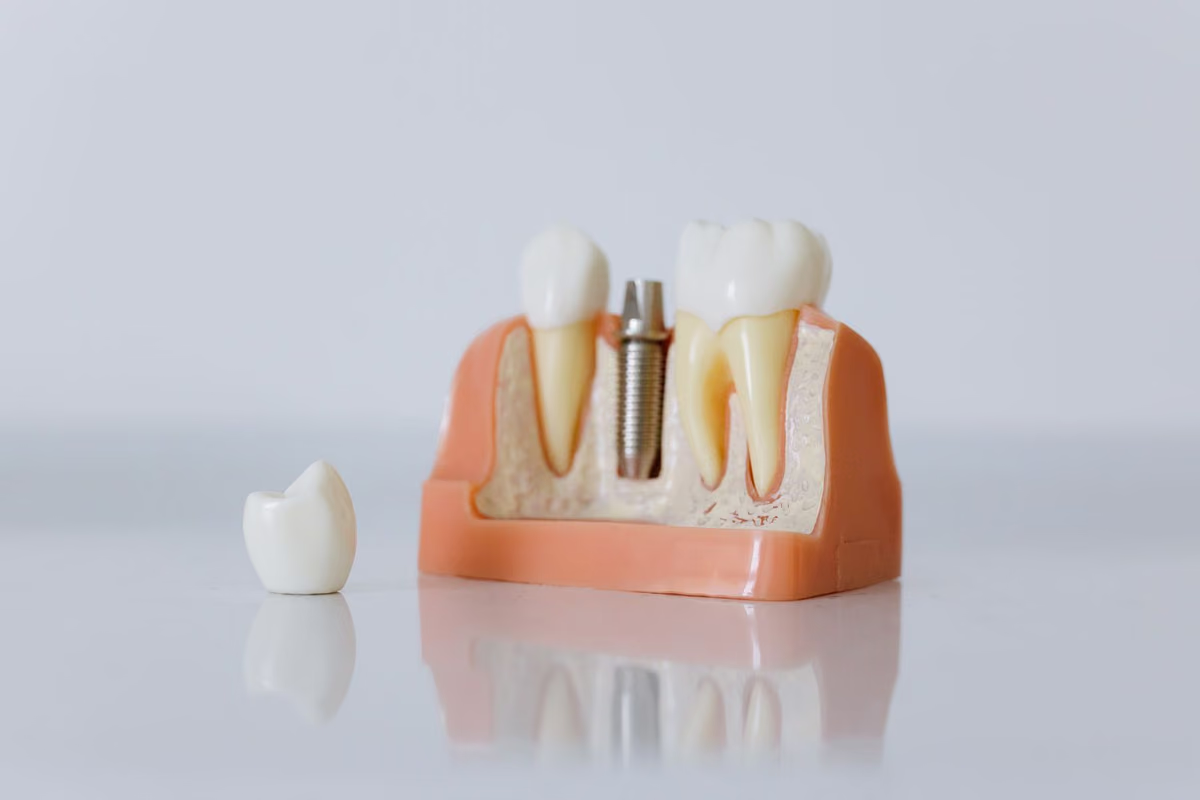
Six implants instead of four, at RM55,000 instead of RM40,000. The extra two spread the bite load over more fixtures, which matters when the bone is softer, the bite is heavy, or the patient grinds. It also means that losing one implant is less likely to put the whole arch at risk — with four, every one is carrying a quarter of the load.
The decision is not a preference. It comes from the CBCT scan: bone volume, bone density and where the nerve and sinus sit. A clinic that lets you pick the number off a price list without scanning you first is selling, not planning.
The downsides nobody here writes about
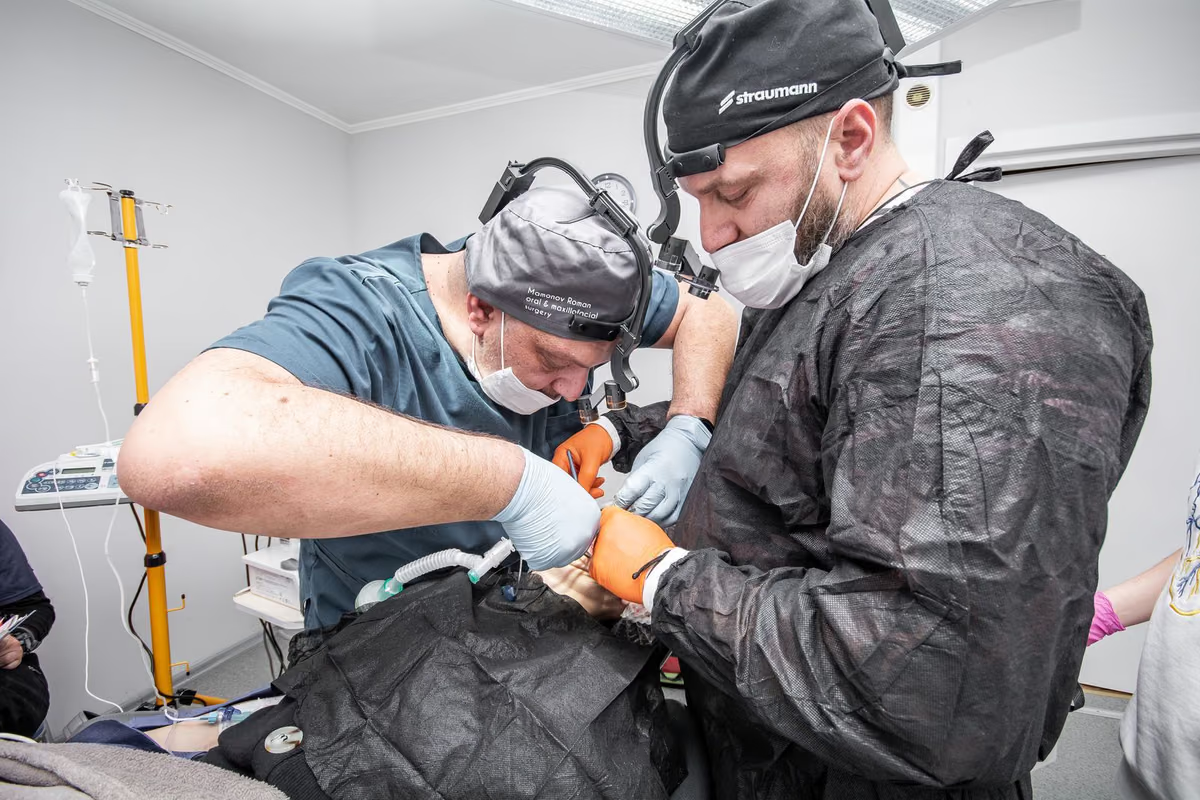
This is major oral surgery, not a cosmetic appointment. Published figures and clinical experience put the honest risks at:
- Failure to integrate — roughly 5 to 10 percent of implants. The fixture does not fuse with the bone and has to come out. Smoking and uncontrolled diabetes push that number up considerably.
- Peri-implantitis. Infection of the gum and bone around an implant, usually years later, usually from cleaning that slipped. It is the leading cause of late failure.
- Bone reduction. To seat the bridge with a natural gum line, some jawbone is deliberately trimmed. It does not grow back, and it narrows your options if you ever want something different.
- Nerve and sinus involvement. Lower-jaw implants sit near the nerve that supplies the lip and chin; upper-jaw implants sit near the sinus. Numbness and sinus irritation are uncommon and largely preventable with proper 3D planning — which is exactly why the CBCT is not optional.
- About 12 weeks of soft food. Longer than most patients expect, and a genuine lifestyle change during healing.
- Structural dependency. Four implants carry one rigid bridge. If one fails, the arch is compromised — this is not four independent teeth.
- Speech, briefly. Most people adapt within weeks, but the first days can feel different.
None of this is an argument against All-on-4. We place these cases and they change lives. It is an argument for going in with your eyes open, because a patient who knows what twelve weeks of soft food feels like copes with week three far better than one who was told it would be easy.
What happens if an implant fails
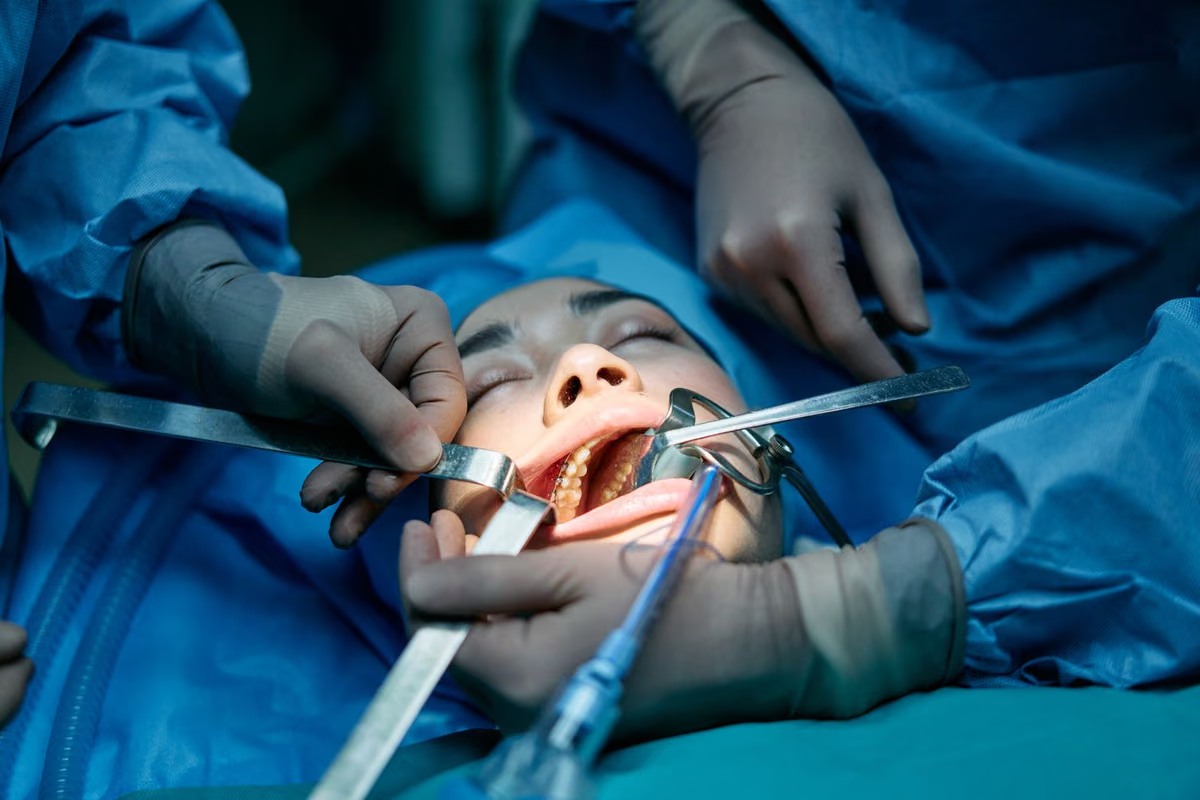
Almost nothing written for Malaysian patients answers this, so here it is.
Early failure — in the first few months, before the permanent bridge. The fixture has not fused, so it is removed, the site heals for a few months, and a replacement goes in. You keep a temporary bridge throughout. It costs you time rather than the whole treatment.
Late failure — years in, usually peri-implantitis. This is harder. Bone has remodelled, the bridge was built for a specific implant layout, and replacing one fixture can mean remaking the bridge. Occasionally the remaining implants can carry the arch with a modified bridge instead.
Ask every clinic this before you sign, and get it in writing: if a fixture fails to integrate, who pays for the replacement, and for how long does that cover last? The answer varies widely and it is rarely volunteered.

Who should not have All-on-4
The clearer question than “am I a candidate”. Treatment is usually postponed or redirected when there is:
- Heavy smoking — the single largest modifiable risk factor for failure
- Uncontrolled diabetes — controlled is usually fine; uncontrolled impairs healing
- Active gum disease — treated first, always
- Severe bone loss beyond what tilted implants can work around
- Certain bone medications, particularly intravenous bisphosphonates
- Head and neck radiotherapy to the jaw
- Severe untreated grinding — manageable, but it changes the plan
On age specifically, since it is one of the most searched questions: there is no upper limit. We have treated patients in their late seventies who did very well. What matters is general health, whether a longer surgery is tolerable, and whether daily cleaning under a fixed bridge is realistic — that last one is worth an honest family conversation where dexterity or memory is declining.
Living with them: eating and cleaning
Eating is the win. Once healed, a fixed bridge restores most of your natural bite force. Nuts, steak, crusty bread, sugarcane, keropok — all back. That is the gap between this and a conventional denture, and for most patients it is the whole reason to spend the money.
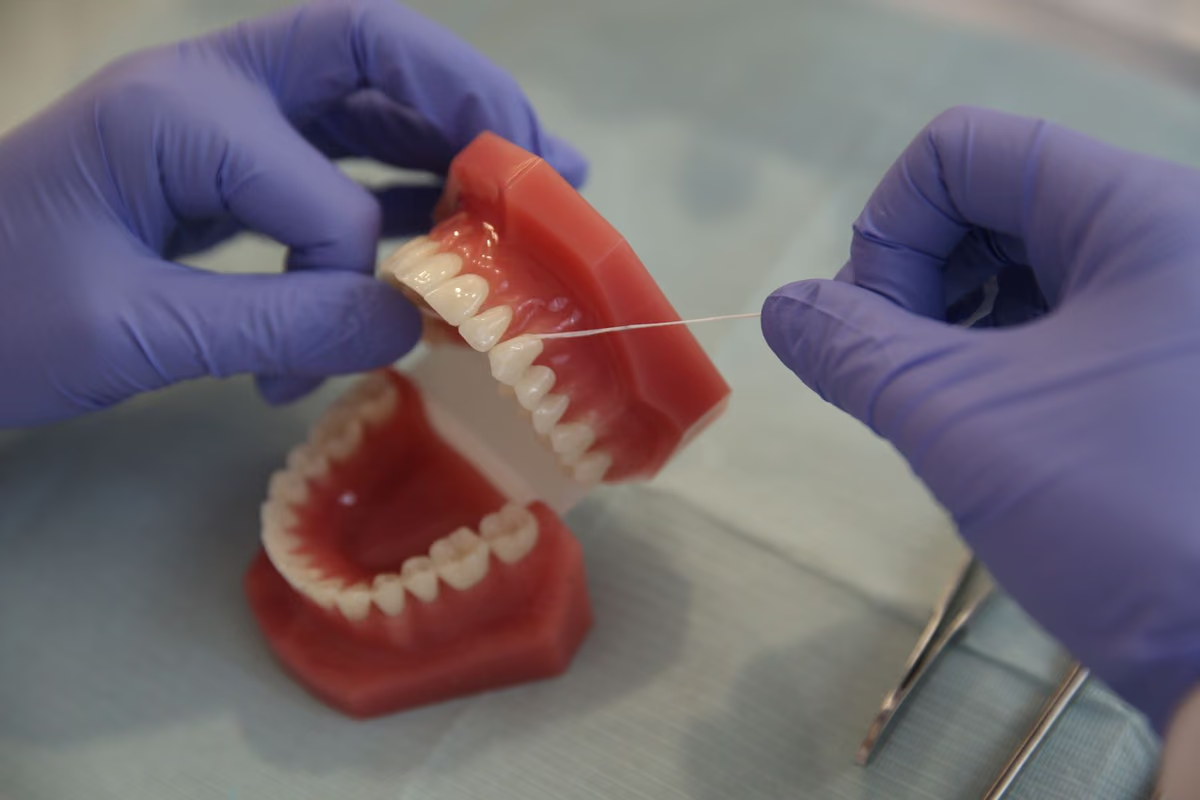
Cleaning is the obligation, and it is more demanding than brushing teeth. The bridge sits slightly off the gum, and that space has to be cleaned under daily with a water flosser or superfloss. Skip it for long enough and you get peri-implantitis — which is how a RM40,000 treatment is lost to a habit.
Plan on a hygienist visit every six months, and expect the bridge itself to need replacing eventually: roughly 10 to 15 years for an acrylic hybrid, longer for zirconia. Budget for it now rather than being surprised later.
The alternatives worth considering
| Option | Rough cost | The trade |
|---|---|---|
| Conventional denture | A fraction of implant cost | Removable, less bite force, needs relining as bone shrinks |
| Implant-supported denture | Between the two | Clips onto 2–4 implants; stable, still removable for cleaning |
| All-on-4 / All-on-6 | From RM40,000 / RM55,000 | Fixed, near-natural bite, surgical, demanding to clean |
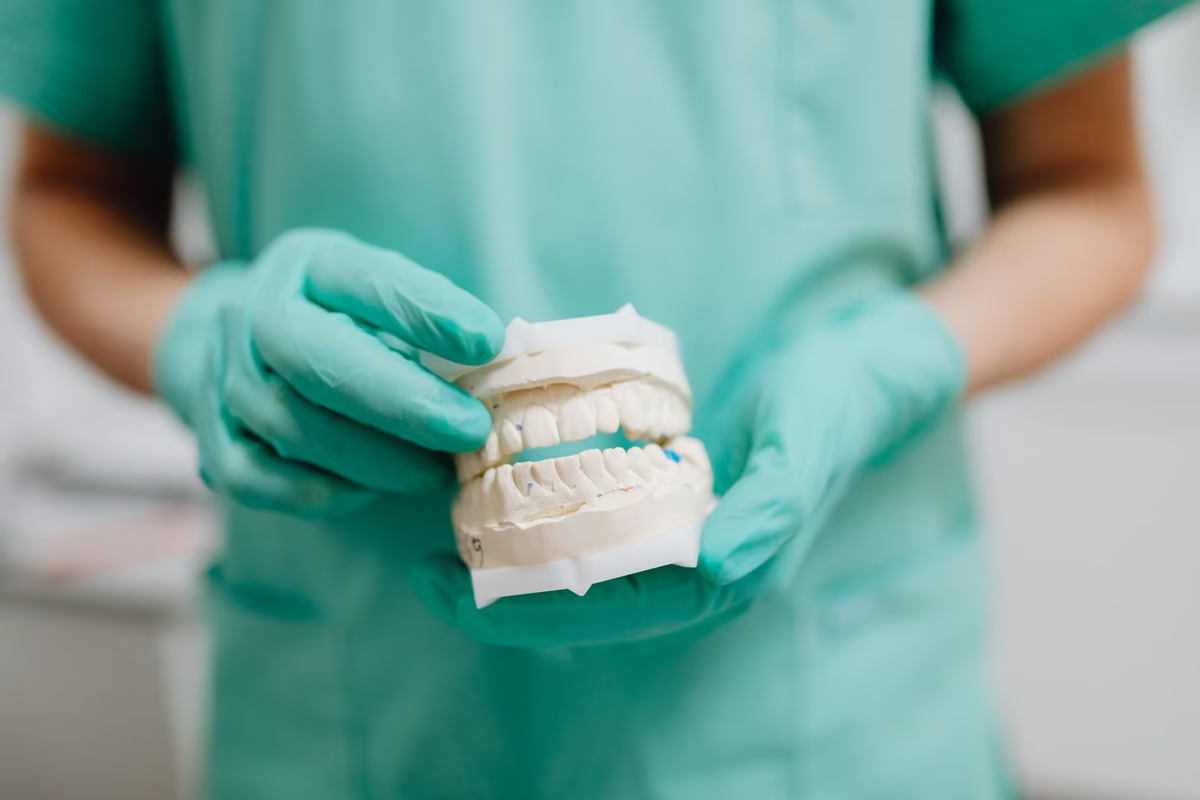
A well-made conventional denture is a legitimate choice, not a consolation prize. If the money would strain you, if major surgery is a concern, or if daily cleaning under a fixed bridge is not realistic, a denture or an implant-supported denture may genuinely serve you better. The implant-supported version is the option most patients have never heard of and it deserves to be on the table.
You can see finished implant cases in our before and after gallery. Results vary between patients — those are individual cases, not a typical outcome. You can also check any dentist's registration with the Malaysian Dental Council before starting treatment, and general oral health guidance is published by the Ministry of Health Malaysia.
Finding out where you actually stand
Everything on this page narrows to one answer only after a CBCT scan — bone volume decides the implant count, the technique and the price. Our dental implant treatment page covers how the process runs, and a consultation is RM30, waived if you begin treatment the same day. If the honest answer is that a denture suits you better, we will tell you that too.
This article is for general information and is not a substitute for a clinical assessment. Risk figures quoted are from published literature and vary by patient; treatment suitability, duration and cost are individual and confirmed only after examination. Back to top