
Written and medically reviewed by Dr. Lau Han Wei, Principal Dental Surgeon
Published · Last updated · 11 min read
Invisible braces in Malaysia is not one treatment. It is an everyday term covering three different things: ceramic braces with tooth-coloured brackets, lingual braces fitted behind the teeth, and clear aligners such as Invisalign. Only one of them is truly invisible.
That matters, because the three differ in price by more than RM10,000, take different lengths of time, and suit different cases. A quote for “invisible braces” means very little until you know which of the three it refers to. This guide sorts them out.

What “invisible braces” actually means here
The phrase is marketing shorthand, not a clinical category. In Malaysia you will also see it written as transparent braces, clear braces, or aligner gigi, and clinics use them loosely and interchangeably. Worth separating before you compare any prices:
- Ceramic braces — fixed brackets, same as metal braces but in a tooth-coloured material. Discreet at a distance, clearly visible up close.
- Lingual braces — fixed brackets bonded to the inside surface of the teeth. Genuinely invisible from the front.
- Clear aligners — removable transparent trays, changed in sequence. Invisalign is one brand; several others exist.
Self-ligating braces get lumped in too, but they are a bracket mechanism rather than an appearance choice — they come in both metal and ceramic.
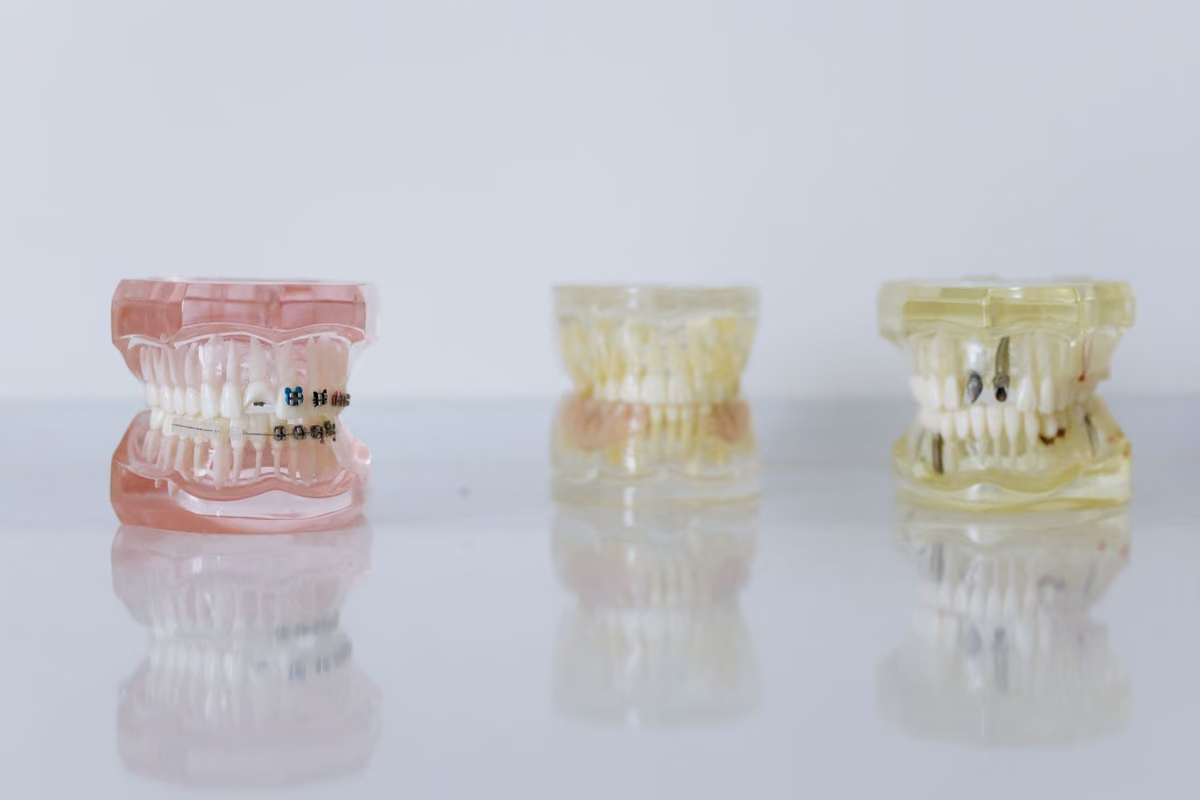
The three discreet options, compared
| Ceramic | Lingual | Clear aligners | |
|---|---|---|---|
| How hidden | Partly — wire still shows | Fully, from the front | Nearly — visible up close |
| Removable | No | No | Yes |
| Depends on you | No | No | Yes — 20–22 hrs a day |
| Complex cases | Strong | Strong | Good, with limits |
| Speech effect | None | Temporary lisp is common | Slight, for a few days |
| Cleaning | Harder — brackets trap food | Hardest to reach | Easiest — take them out |
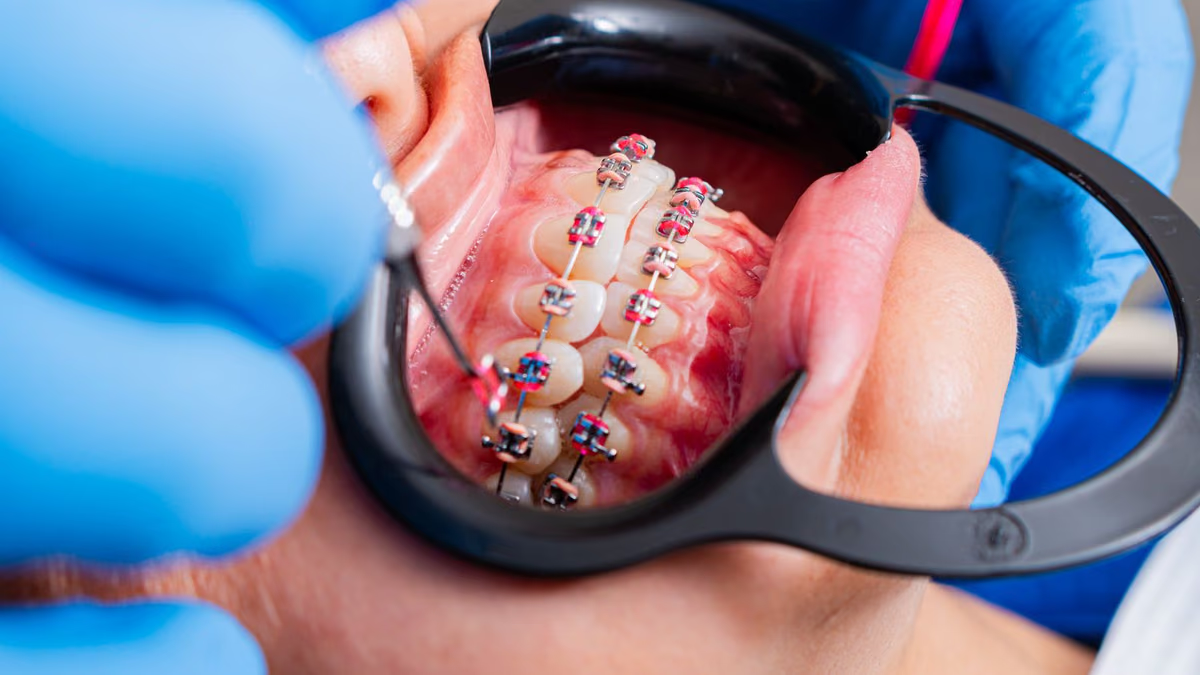
Ceramic braces
Mechanically identical to metal braces — same wires, same forces, same appointments — with brackets made from a tooth-coloured ceramic instead of steel. From a metre away most people will not register them.
The honest limitations: the archwire is still metal and still visible, ceramic brackets are more brittle than steel so breakages are more common, and the clear elastic ties can pick up staining from coffee, tea and curry between visits. None of that affects the result — it affects how the treatment looks while you are in it.
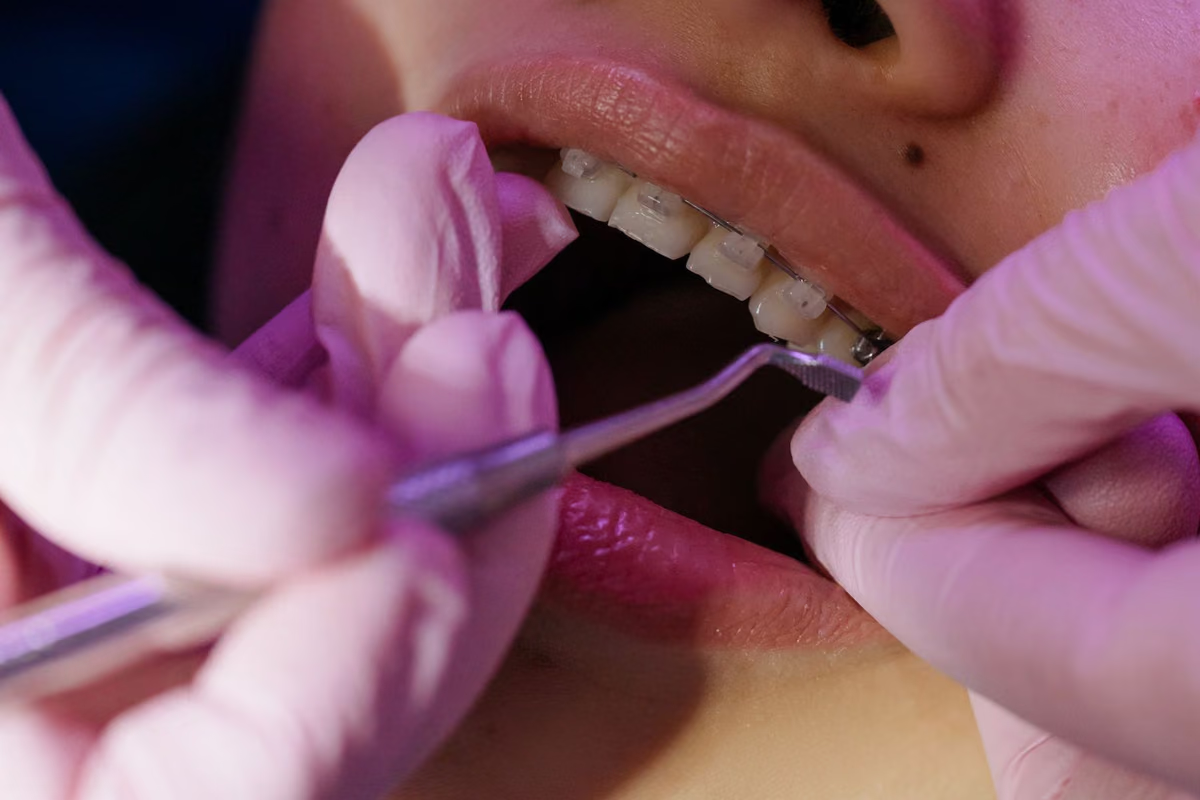
Lingual braces
The only option that is genuinely invisible. Brackets are bonded to the tongue side of the teeth, so nothing shows from the front at any distance — which is why they appeal to people whose work involves being looked at closely.
The trade-offs are real, and worth hearing before you fall in love with the idea. A lisp for the first few weeks is common while your tongue adapts. The brackets sit where your tongue rests, so initial irritation is more noticeable than with front-mounted braces. Cleaning is harder because you cannot see what you are doing. And they are the most expensive route by a wide margin — the fitting is customised per tooth and the technique demands more chair time.
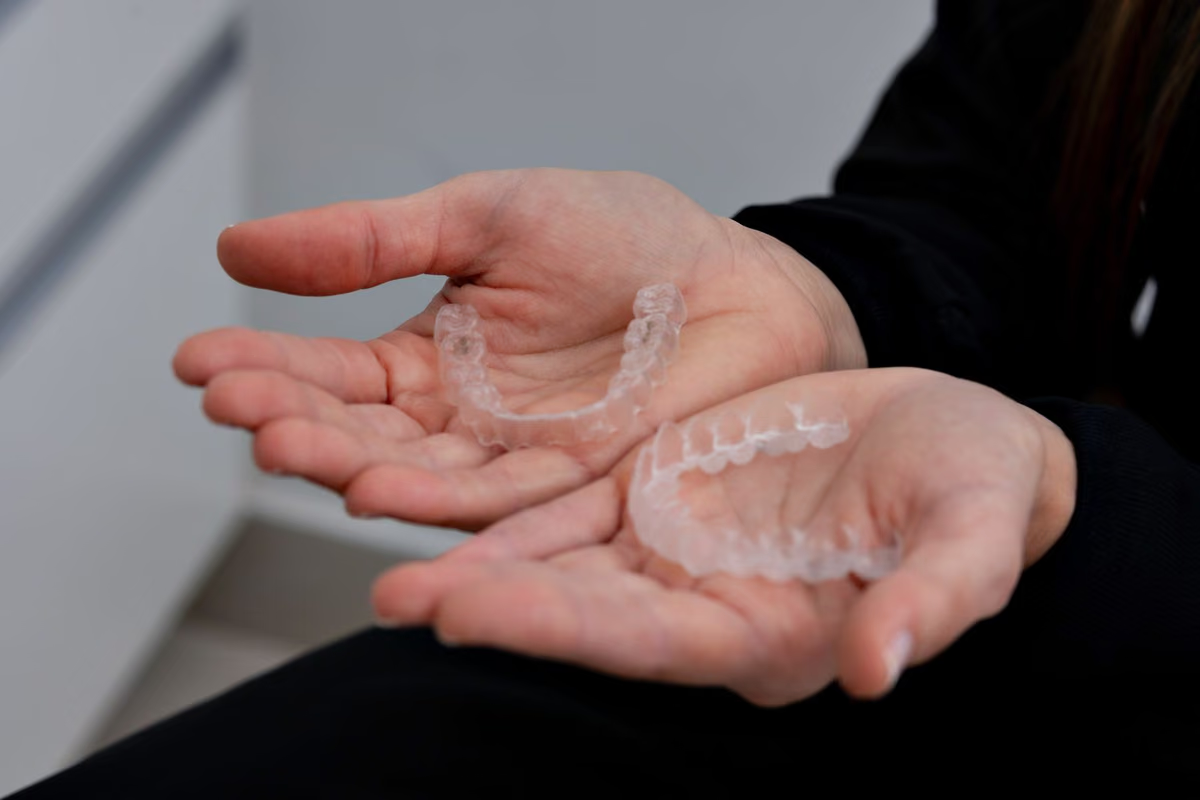
Clear aligners
What most people actually picture when they search for invisible braces. A series of transparent trays, each moving your teeth a fraction further, swapped roughly weekly. You take them out to eat and to clean your teeth — which is the single biggest practical advantage over anything fixed.
It is also the only option whose success depends on you. Aligners work while they are in your mouth, 20 to 22 hours a day. Patients who leave them out for long stretches extend their own treatment. If you already know you are the forgetful type, that is worth weighing honestly — a fixed appliance removes the variable entirely, because you cannot take it out.
We use Invisalign at our Sri Petaling clinic. Several other aligner brands are available in Malaysia and the underlying principle is the same across all of them; what varies is the planning software, the number of trays in a course, and how refinements are handled.
Mail-order aligner kits vs clinic treatment
Malaysia now has several direct-to-consumer aligner services where you take your own impressions at home and trays arrive by post. They are cheaper, and for a very mild case in a healthy mouth they can work. The category is not a scam, and it is worth saying so plainly.
What changes is what nobody checks. Before we start moving anyone's teeth, an in-person assessment establishes:
- Gum health. Moving teeth through inflamed or receding gums can worsen bone loss. This is the one that matters most, and it cannot be seen in a photo.
- Root position and length, visible only on an X-ray. Roots determine how far a tooth can safely move.
- Untreated decay or failing fillings, which need fixing before aligners go over them.
- Your bite, not just how the front teeth look. Straightening visible teeth while leaving a bite problem underneath can create new issues.
The reasonable summary: a remote service is a cosmetic product for simple front tooth alignment. Clinic treatment is a medical one. If your case is genuinely mild, your gums are healthy and nothing hurts, the gap between them narrows. If you do not know whether that describes you, that uncertainty is itself the reason to get examined — a consultation with us is RM30, and it is waived if you go ahead with treatment the same day.

Which one suits your case
Nobody can answer this properly from a website — it needs an examination and an X-ray. But the usual reasoning goes like this:
| If this is you | Usually points to |
|---|---|
| Mild to moderate crowding, and you want it discreet | Clear aligners |
| You know you will forget to wear something removable | Ceramic or lingual |
| Nothing may show at all, budget is secondary | Lingual |
| Significant bite correction needed | Fixed appliances, possibly with extractions |
| Cost is the deciding factor | Metal braces — least discreet, lowest price |
Age matters less than most people assume. Healthy teeth and gums decide suitability, not the number on your IC — a good share of our orthodontic patients are adults in their thirties and forties, and treatment works the same way at 45 as at 25, if slightly slower. For teenagers the calculation is different: fixed appliances often suit better simply because they remove the discipline question, and jaw growth can be used to help rather than worked around. For children, timing is driven by development, which is why an early assessment is useful even when treatment will not begin for years.
You can see finished cases from both routes in our before and after gallery. Results vary between patients — those are individual cases, not a typical outcome.
How long each takes, and what happens after
Treatment time is driven by your case far more than by which appliance you choose. Two people in ceramic braces can finish nine months apart. As a rough guide:
| Type | Typical range | Visit frequency |
|---|---|---|
| Ceramic braces | 18 – 30 months | Every 4–6 weeks for adjustment |
| Lingual braces | 18 – 30 months | Every 4–6 weeks |
| Clear aligners | 6 – 24 months | Every 6–10 weeks, trays changed at home |
Aligners often finish sooner in the mild cases they suit best, which is part of their appeal. That advantage disappears in complex cases, where the aligner series simply gets longer.
The part almost nobody asks about at the quote stage is what happens afterwards. Teeth drift back. That is normal biology, not a failed treatment, and it applies to every type on this page equally. Retainers hold the result — usually worn full-time for a short period, then at night, in most cases indefinitely.
This is why we push people to ask whether retainers are inside their quote before they compare two numbers. A treatment that finishes beautifully and relapses over three years has not really finished. Ask what your first set costs, what a replacement costs, and how often people typically need replacing — the third question tells you the most.
What they cost in Malaysia
Published ranges across Malaysian clinics vary widely — roughly RM5,000 to RM8,000 for metal braces, RM7,000 to RM12,000 for ceramic, RM10,000 to RM25,000 for clear aligners, and RM15,000 upward for lingual. Here is what we charge at our Sri Petaling clinic:
| Treatment | Price |
|---|---|
| Conventional metal braces | RM5,800 |
| Genius self-ligating | RM6,800 |
| Damon self-ligating | RM7,300 |
| Invisalign clear aligners | RM6,000 – RM18,000 |
Full detail on what drives the aligner range, what should already be included, and how the 0% monthly plans work is in our Invisalign price guide for KL. Every treatment we list sits on the published price list, which is the page we keep current.
Whichever route you take, you can verify that whoever treats you is registered with the Malaysian Dental Council, and general oral health guidance for Malaysia is published by the Ministry of Health.
Finding out which applies to you
Most people arrive having already decided which type they want, and a fair number leave having changed their mind — usually because an X-ray showed something the mirror could not. Our braces and Invisalign pages cover how each treatment runs from first scan through to retainers.
This article is for general information and is not a substitute for a clinical assessment. Treatment suitability, duration and cost are individual to each patient and confirmed only after examination. Back to top