
Written and medically reviewed by Dr. Lau Han Wei, Principal Dental Surgeon
Published · Last updated · 10 min read
In the Invisalign vs braces decision, neither option is better in general — they are better at different things. Aligners are more discreet and easier to live with. Fixed braces cost less, work regardless of your discipline, and handle severe cases more predictably.
Most comparisons you will read online lean towards Invisalign, and for a lot of patients that is the right call. But it means the other half of the picture rarely gets written down. This article covers the cases where braces are the better clinical choice — because a fair number of the people reading this are in one of them, and finding that out after paying for aligners is an expensive way to learn it.

The short answer
| Choose aligners if | Choose braces if |
|---|---|
| Being seen in braces would genuinely bother you | Cost is the deciding factor |
| You are disciplined about routines | You know you would forget to wear them |
| Your case is mild to moderate | Your case involves significant bite correction |
| You want to eat without restrictions | You would rather not think about it daily |

What each actually costs
Rather than quote a wide national range, here are our own figures, from the published price list:
| Treatment | Price | Difference vs metal braces |
|---|---|---|
| Conventional metal braces | RM5,800 | — |
| Genius self-ligating | RM6,800 | +RM1,000 |
| Damon self-ligating | RM7,300 | +RM1,500 |
| Invisalign | RM6,000 – RM18,000 | +RM200 to +RM12,200 |
The gap at the entry level is smaller than most people expect — just RM200 between metal braces and a straightforward aligner case. It is at the complex end that the two diverge sharply, because aligner pricing scales with the number of trays your case needs while braces pricing largely does not. A full breakdown of what drives that range is in our Invisalign price guide for KL.
The “Invisalign is faster” myth
This is the claim we correct most often in consultations. Aligners have a reputation for speed because they are typically used on mild cases, and mild cases finish quickly with anything. The appliance is not what made it fast — the case was.
Compare the two on the same moderate case and the difference largely disappears. In complex cases, fixed braces are often quicker, because they apply continuous force and do not depend on anyone remembering anything. Aligner treatment also stretches when wear time slips, and refinement batches add months that were not in the original estimate.
A realistic expectation for either route is 6 to 30 months, set by your case rather than your appliance.

Daily life: eating, comfort, appearance
This is where aligners win clearly, and it is worth being direct about it.
- Eating. Trays come out, so nothing is off the menu. With fixed braces, hard and sticky foods risk breaking a bracket — which in Malaysia means care with things like nuts, keropok, sugarcane and toffee.
- Comfort. Both are sore for a few days after a change or an adjustment. Braces add a second kind of discomfort: brackets and wires rubbing the inside of the lips and cheeks, especially in the first fortnight.
- Appearance. Aligners are near-invisible in normal conversation. Ceramic brackets narrow the gap somewhat, but the wire still shows.
- Appointments. Braces need adjusting every 4–6 weeks. Aligner reviews are usually every 6–10 weeks, since you change trays at home.
What each one can actually fix
Clear aligners have improved a great deal and now handle far more than they did a decade ago. Attachments — small tooth-coloured bumps bonded to the teeth — let them grip and rotate teeth in ways the early systems could not.
Fixed braces still hold an edge in a few situations: large vertical movements, significant rotations of round-rooted teeth like canines, closing space after extractions, and substantial bite correction. In those cases braces are not the budget option — they are the clinically better one.
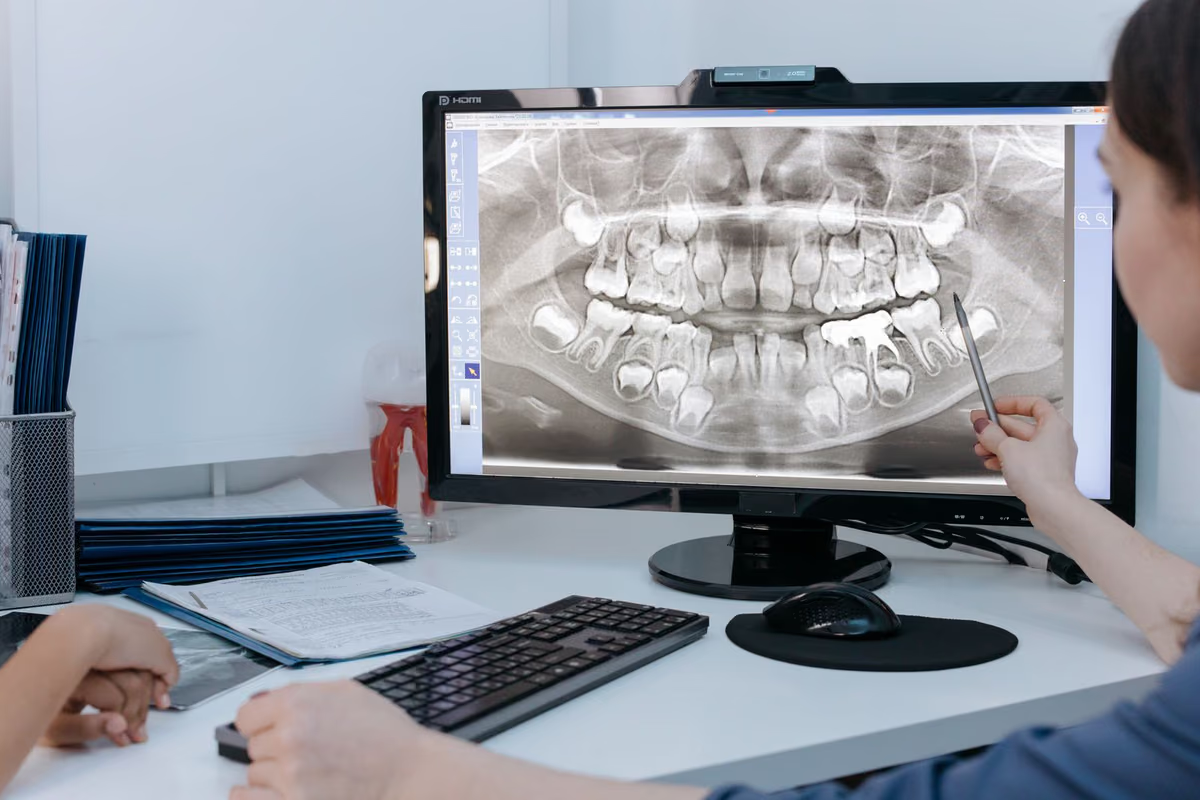
The honest caveat on both: neither can be judged from a photo or a mirror. Root position and bone level only show on an X-ray, and they decide how far a tooth can safely move.
Cleaning and long-term tooth health
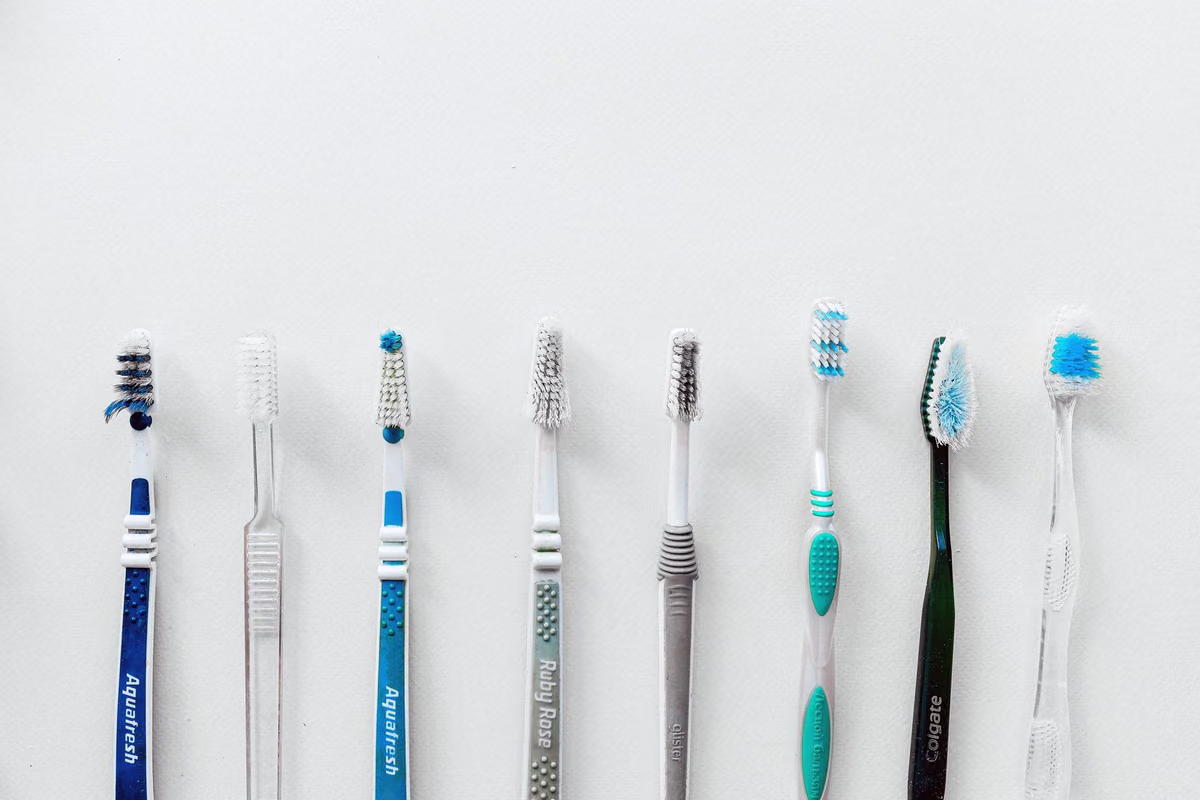
A practical difference with lasting consequences. Brackets and wires trap food and plaque, and brushing around them properly takes real effort. Patients who do not keep it up can finish treatment with straight teeth and white demineralisation marks where the brackets sat — permanent, and avoidable.
Aligners sidestep this entirely, because you remove them and brush normally. The caveat is that anything other than water should be taken out for, including teh tarik and coffee — drinking with trays in traps sugar and acid against the enamel for hours.
When braces are the better choice
The half of the answer that tends to go unsaid. Fixed braces are the better recommendation when:
- You already know you are not disciplined. Aligners work 20 to 22 hours a day or they do not work. This is not a character judgement — it is a practical fact, and people who are honest about it at the start get better results and spend less.
- The case needs significant bite correction or space closure after extractions.
- Cost genuinely decides it. RM5,800 versus RM6,000 upward is a real difference, and a completed course of metal braces beats an abandoned aligner treatment every time.
- It is for a teenager who would rather not be responsible for them. Fixed appliances remove the question.
- You would rather not think about your teeth for two years. Some people find the daily tray routine a low-grade irritation. Braces are fitted and then largely forgotten between visits.
The middle ground most people miss
The choice is usually framed as metal braces or Invisalign, as if nothing sits between them. Two things do.
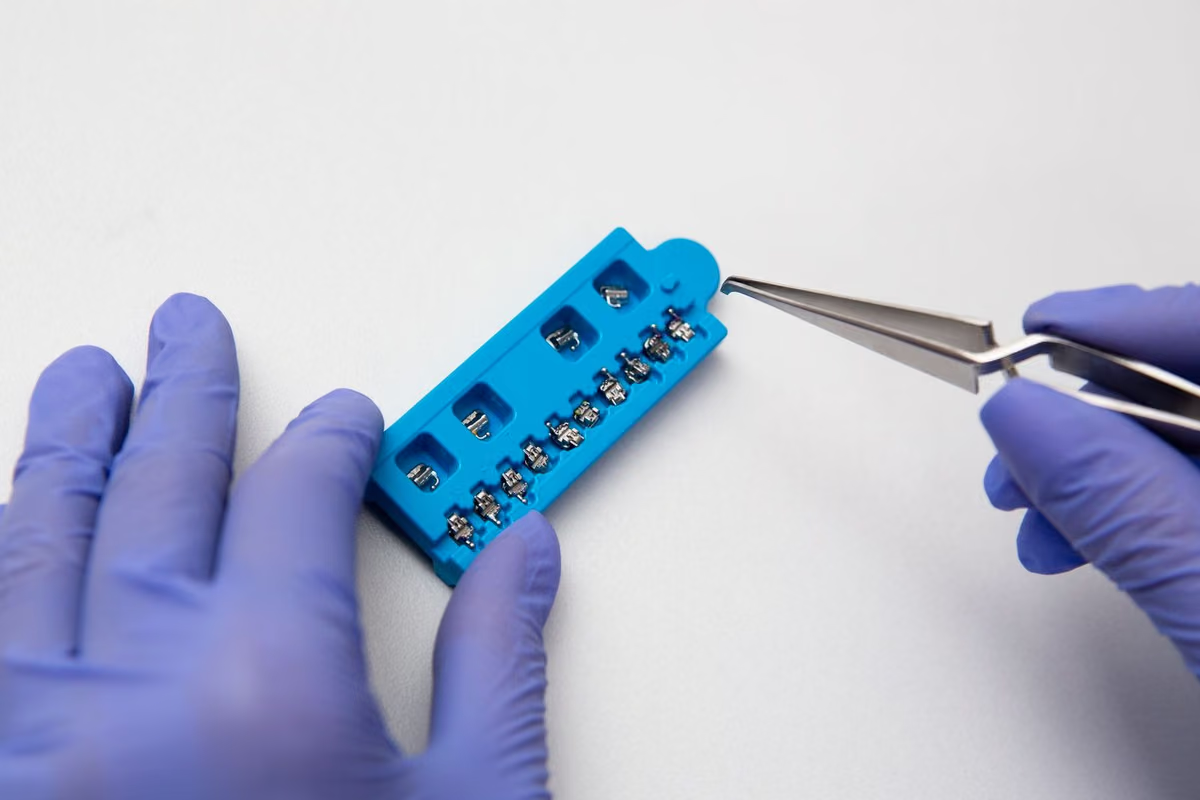
Self-ligating braces — Genius at RM6,800 and Damon at RM7,300 — use a bracket that holds the wire without elastic ties. Less friction, fewer adjustment visits, and they sit below the cost of most aligner cases while keeping the reliability of a fixed appliance. For someone who wants a faster-feeling fixed treatment without aligner pricing, this is often the sensible answer, and almost nobody asks about it.
Ceramic brackets narrow the appearance gap at a lower cost than aligners. We cover how all the discreet options compare in our guide to invisible braces in Malaysia.
Finished cases from both routes are in our before and after gallery. Results vary between patients — those are individual cases, not a typical outcome. You can also check any dentist's registration with the Malaysian Dental Council before starting treatment anywhere, and general oral health guidance is published by the Ministry of Health Malaysia.
Working out which applies to you
The two questions that settle it are what your X-ray shows and how honest you are about your own habits. We can answer the first; only you can answer the second. Our Invisalign and braces pages cover how each runs from first scan to retainers, and a consultation is RM30 — waived if you start treatment the same day.
This article is for general information and is not a substitute for a clinical assessment. Treatment suitability, duration and cost are individual to each patient and confirmed only after examination. Back to top